

What is the role of the neutralization process in a food oil refinery machine?
Oct 27, 2025
Leave a message
The neutralization process is a critical step in the operation of a food oil refinery machine. As a leading supplier of Edible Oil Refinery Machine, we understand the significance of this process in ensuring the quality and safety of edible oils. In this blog, we will explore the role of the neutralization process in a food oil refinery machine, its importance, and how it contributes to the overall efficiency of the oil refining process.
Understanding the Basics of Oil Refining
Before delving into the neutralization process, it is essential to understand the overall oil refining process. Crude oil extracted from various sources such as seeds, nuts, and fruits contains impurities, including free fatty acids (FFAs), phospholipids, pigments, and odor - causing compounds. These impurities not only affect the taste, odor, and appearance of the oil but also reduce its shelf - life and stability.
The refining process aims to remove these impurities and produce a high - quality, stable, and palatable edible oil. It typically consists of several stages, including degumming, neutralization, bleaching, and deodorization. Each stage plays a crucial role in purifying the oil and enhancing its quality.
What is the Neutralization Process?
The neutralization process, also known as alkali refining, is a chemical process used to remove free fatty acids (FFAs) from crude oil. FFAs are formed during the storage and extraction of oil due to the hydrolysis of triglycerides. High levels of FFAs in oil can lead to rancidity, off - flavors, and a decrease in the oil's smoke point.
In the neutralization process, an alkali solution, usually sodium hydroxide (NaOH) or potassium hydroxide (KOH), is added to the crude oil. The alkali reacts with the FFAs to form soap (sodium or potassium salts of fatty acids) and water. The reaction can be represented by the following equation:
R - COOH (Free Fatty Acid)+ NaOH (Alkali)→ R - COONa (Soap)+ H₂O
The soap formed during the reaction is insoluble in oil and can be easily separated from the oil phase. This separation is typically achieved through sedimentation, centrifugation, or a combination of both methods.
Role of the Neutralization Process in a Food Oil Refinery Machine
1. Removal of Free Fatty Acids
The primary role of the neutralization process is to reduce the FFA content in the crude oil to an acceptable level. By reacting with the FFAs, the alkali effectively converts them into soap, which can be removed from the oil. This helps to improve the flavor, odor, and stability of the oil. For example, in Soybean Oil Refinery Machine, the neutralization process is essential for producing high - quality soybean oil with a low FFA content.
2. Removal of Phospholipids and Other Impurities
In addition to FFAs, the neutralization process also helps to remove phospholipids and other impurities from the oil. Phospholipids are polar compounds that can cause cloudiness and instability in the oil. During the neutralization process, the alkali can react with the phospholipids, causing them to precipitate out of the oil. This precipitation can be further enhanced by the addition of water or other chemicals.
3. Improvement of Oil Color
The neutralization process can also have a positive impact on the color of the oil. Some pigments present in the crude oil can be removed along with the soap during the separation process. This helps to produce a lighter - colored oil, which is more appealing to consumers.
4. Enhancement of Oil Stability
By removing FFAs and other impurities, the neutralization process improves the stability of the oil. FFAs are more prone to oxidation than triglycerides, and their removal reduces the risk of rancidity and the formation of off - flavors. This extends the shelf - life of the oil and makes it more suitable for long - term storage and use.
The Neutralization Process in Different Types of Oil Refinery Machines
The neutralization process can be carried out in different types of oil refinery machines, depending on the scale of production and the specific requirements of the oil.
Batch Neutralization
In batch neutralization, a specific quantity of crude oil is placed in a tank, and the alkali solution is added in a single batch. The mixture is then stirred for a certain period to ensure complete reaction. After the reaction is complete, the soap is allowed to settle, and the oil is separated from the soap phase. Batch neutralization is suitable for small - scale production and for oils with relatively low FFA content.
Continuous Neutralization
Continuous neutralization is a more efficient process used in large - scale oil refineries. In this process, the crude oil and the alkali solution are continuously fed into a reactor, where they react continuously. The reaction mixture then passes through a series of separation devices, such as centrifuges, to separate the oil from the soap. Continuous neutralization offers several advantages, including higher production capacity, better control of the process, and more consistent product quality.
Impact of the Neutralization Process on the Overall Efficiency of the Oil Refining Process
The neutralization process has a significant impact on the overall efficiency of the oil refining process. By removing FFAs and other impurities, it reduces the load on the subsequent refining stages, such as bleaching and deodorization. This can lead to lower operating costs, as less energy and chemicals are required in these stages.
Moreover, the quality of the oil after neutralization directly affects the performance of the downstream equipment. For example, a lower FFA content in the oil can reduce the corrosion of the equipment and improve its lifespan. In modern Refinery Automation Machinery, the neutralization process is carefully monitored and controlled to ensure optimal performance and product quality.
Challenges and Solutions in the Neutralization Process
Despite its importance, the neutralization process also faces several challenges. One of the main challenges is the formation of excess soap, which can lead to oil losses. This can be minimized by carefully controlling the amount of alkali added and the reaction conditions.
Another challenge is the presence of emulsions, which can make the separation of the oil and soap difficult. To overcome this problem, demulsifiers can be added to the reaction mixture to break the emulsions and facilitate the separation process.
Conclusion
The neutralization process is a vital step in the operation of a food oil refinery machine. It plays a crucial role in removing free fatty acids, phospholipids, and other impurities from the crude oil, improving the color and stability of the oil, and enhancing the overall efficiency of the oil refining process.

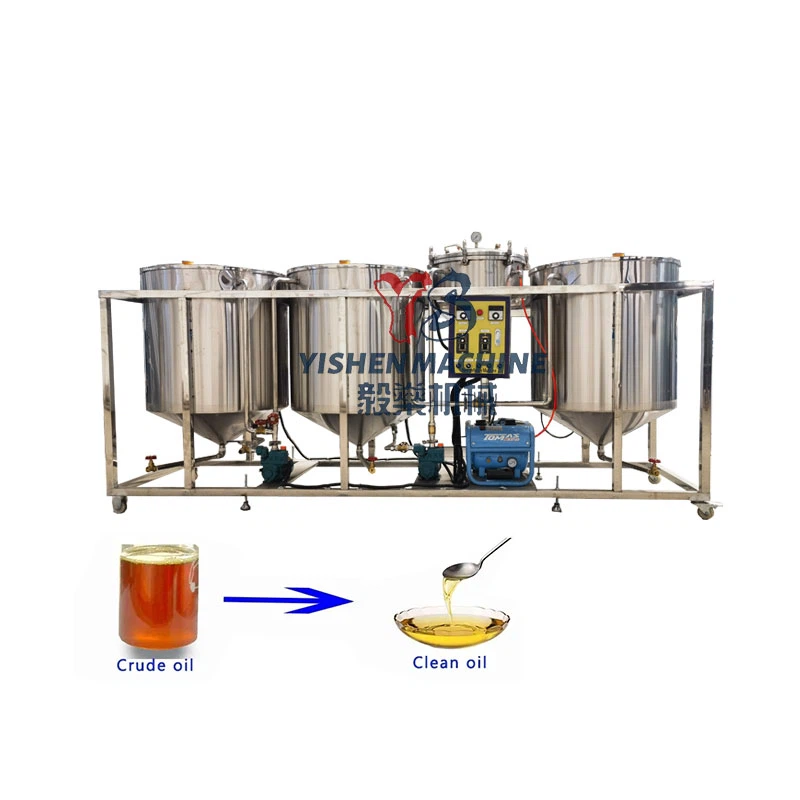
As a supplier of high - quality food oil refinery machines, we are committed to providing our customers with advanced and reliable equipment that can effectively carry out the neutralization process. Our machines are designed to meet the diverse needs of the oil industry, from small - scale producers to large - scale refineries.
If you are interested in learning more about our food oil refinery machines or would like to discuss your specific requirements, please feel free to contact us. We look forward to the opportunity to work with you and help you achieve your goals in the oil refining industry.
References
- Fennema, O. R. (1996). Food Chemistry. Marcel Dekker, Inc.
- Shahidi, F. (Ed.). (2005). Bailey's Industrial Oil and Fat Products. John Wiley & Sons.
- Gunstone, F. D., Harwood, J. L., & Padley, F. B. (2007). The Lipid Handbook. CRC Press.