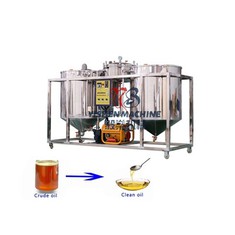
Edible Oil Refinery Machine
Description
Technical Parameters
Henan Yishen Machinery Co., Ltd. : Your Professional Edible Oil Refinery Machine Manufacturer!
Founded in 2020, Yishen Machinery is located in Zhengzhou City, Henan Province. We mainly produce oil press, oil refining machine, and agricultural machinery. We have industry-leading manufacturing technology and capabilities in research and development for new oil presses and refining.
Excellent Customer Service
Yishen Machinery provides excellent customer services, which include on-time delivery, quick response time, and open communication with clients. We offer complete pre-sales answers and after-sales support, leading customers to visit our production workshop.
Professional Team
Our company has a team of high efficiency in sourcing management, production management, quality control, delivery fulfillment. In each segment, our staff members can provide a high level of product & services to meet customer's demand for high quality, reliability, and safety.
Quality Assurance
Our products include oil presses, oil refining machines, and agricultural machinery, all of which have CE certification, and our equipment has passed the ISO9001:2000 quality system certification.
Leading Service
We have many years of industry experience, a complete production management, quality supervision, and sales service operation system. Whether you want to purchase an Oil Press or Oil Refining Equipment, just email your requirements and we can customize the product for you.

Cooking oil refinery machine is designed to refine crude edible oil, preliminarily extracted from oil crops. The refined oil is of high quality, free from harmful impurities and meets the national quality standard of edible oil.

Crude oil refining machine is to get rid of the harmful impurities and needless substance in the crude oil,aims at improving the oil storage stability,flavor and color. Then get standard quality edible oil or provides qualified material for deep processing.

Waste oil refiners usually refer to the refining of waste oil. The existence of impurities in waste oil not only affects the edible value and safe storage of the oil, but also brings difficulties to deep processing, but the purpose of refining is not to remove all impurities in the oil, but to remove impurities that are harmful to consumption, storage, industrial production, such as protein, phospholipid, mucus, moisture, etc., and the beneficial "impurities" are removed. Such as tocopherol should be retained.
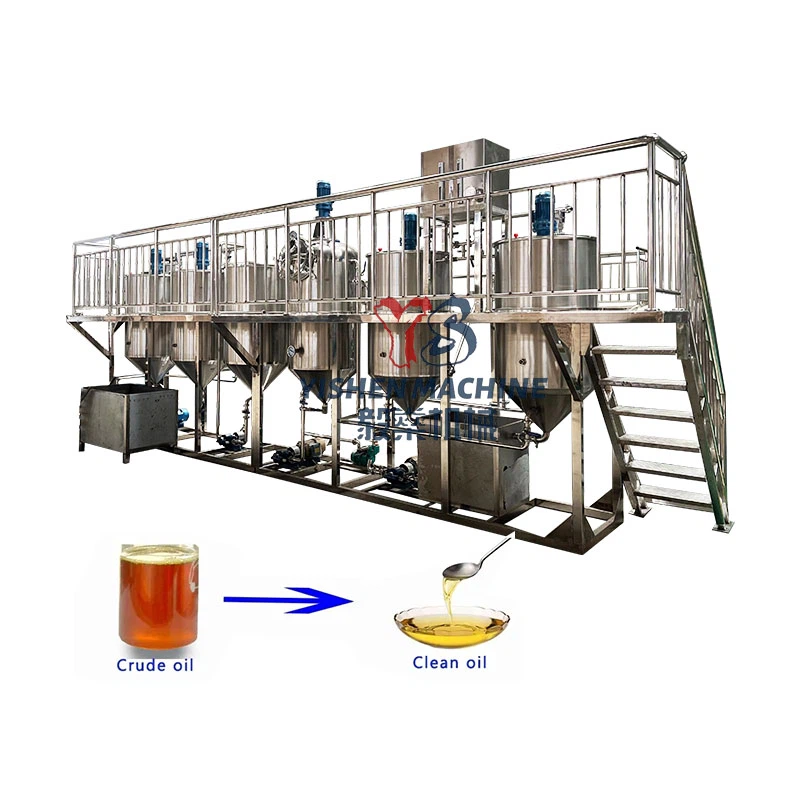
Coconut Oil Refinery Machine is a semi-automatic oil production machine set which connects each coconut processing equipment including sieving machine, cooker, oil press and filter, and conveyors. It is an efficient assembly unit to extract coconut oil from copra. This is a small complete oil refining unit for edible oil production, based on batch type refining process. The main components includes heat conduction oil furnace, steam generator, deodorizing pot, decoloring pot, refining pot and leaf filter.
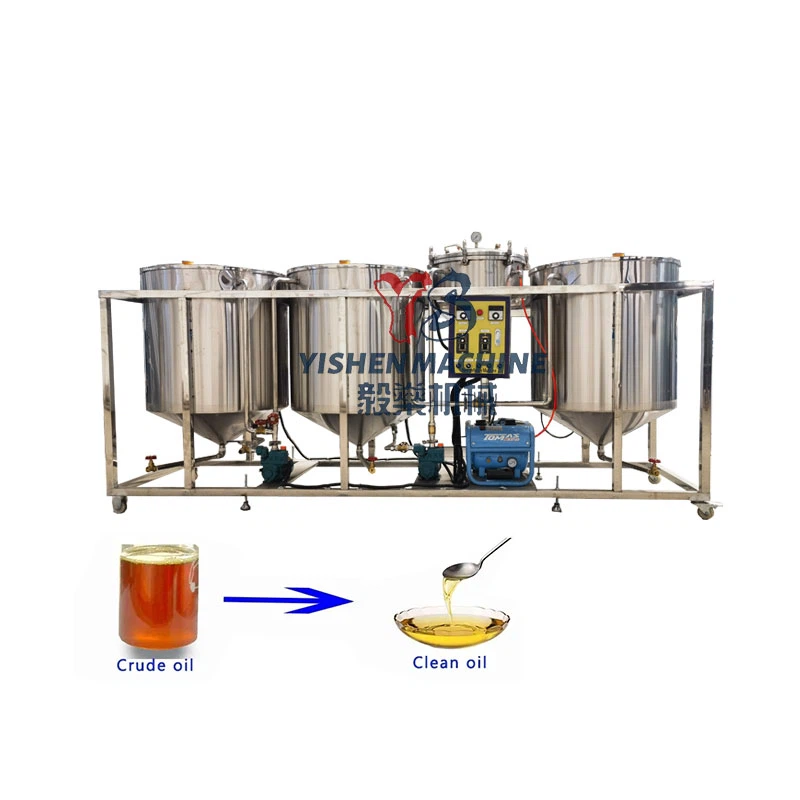
Soybean oil refining machine is a small refining equipment specially used to refine edible oil, which can also be called edible oil refining equipment. Soybean oil refining machine can remove impurities in edible oil, so that edible oil has a longer storage period, better color and odor, and more green and healthy. There are three kinds of oil equipment used in the production of first class soybean oil, which are soybean pretreatment equipment, soybean oil leaching equipment and soybean oil refining equipment.

Food Oil Refinery Machine can remove impurities that are contained in crude oil, and improve the functionality of the oils. It is available for refining palm oil, palm kernel oil, corn germ oil, peanut oil, soybean oil, sunflower seed oil, rapeseed oil, rice bran oil, coconut oil, etc.

When choosing edible oil deodorization equipment, it is necessary to consider a number of factors to ensure that the equipment can meet the production needs and the quality standards of grease.

In the use of oil refiners, because of their different sources, refining must be carried out in different conditions. With the different crude oil (soybean oil, peanut oil, sunflower oil, etc.), the refining process can be divided into: degumming, neutralization, decolorization, winterization, deodorization and other steps, according to the variety of crude oil can be used several steps or all of the process.

The physical refining process of the palm oil refiner is as follows: Hair oil, heater, static mixer, acid reactor, multi-effect mixer - heater 2 - centrifugal machine - washing centrifuge - heater 3 - vacuum dryer - clay mixer, decoloring, filtering, decoloring qing oil tank, gas analysis apparatus, heat transfer, deodorization, heat transfer, refined petroleum products.
What is Edible Oil Refinery Machine?
An edible oil refinery machine is an oil refinery machine meant especially for edible oils. This means that the machine processes different types of edible oils on an integrated platform by carrying out a set of simultaneous processing on the food oils.
Elevates Oil Quality and Sustainability
An Edible Oil Refinery Machine plays a crucial role in enhancing the quality and sustainability of cooking oils. Raw or crude oils obtained from sources like seeds, nuts, and fruits often contain impurities, undesirable flavors, and volatile compounds. The refinery process involves various stages of purification and refinement to remove these impurities, which results in conversion of oils that are safe for consumption and have improved taste, aroma, and stability. Additionally, the impact of refined edible oil impacts many aspects, such as
●Refining removes harmful substances and potential contaminants from the oils, making them healthier for consumption. This is especially important as cooking oils are a fundamental ingredient in daily diets.
●The removal of impurities leads to oils with a cleaner taste and aroma. This enhances the flavor of cooked dishes and preserves the natural essence of the ingredients.
●Refined oils are more stable and have a longer shelf life due to the removal of components that can cause spoilage or fouling.
●Refined oils have consistent quality, ensuring that they perform reliably during cooking processes such as frying, sautéing, and baking.
●Refining processes can include steps to minimize the environmental impact of production, such as proper waste management and energy-efficient practices.
Offers Tailored Products
An Edible Oil Refinery Machine has the capability to produce a variety of edible oil products by customizing the refining process to meet specific consumer demands. Different types of oils, blends, and formulations can be created to align with varying industry needs, taste preferences, and health considerations. The impact of customized cooking oil production is
●People have different preferences when it comes to cooking oils. Some prefer neutral oils for versatile cooking, while others seek oils with distinct flavors like olive oil or coconut oil. A refinery plant can craft oils that match these preferences.
●Consumers increasingly prioritize health and nutrition. The refinery plant can produce oils with specific health benefits, such as high-oleic oils or oils with omega-3 fatty acids, addressing the needs of health-conscious individuals.
●Different culinary practices require specific oils. A refinery plant can create oils suitable for high-heat cooking, deep frying, salad dressings, or baking, catering to the specific requirements of various cooking methods.
●The refinery plant can stay attuned to food trends and innovations. For example, if there is a growing demand for plant-based diets, the plant can produce oils that align with these dietary choices.
●Offering tailored products allows the plant to establish a distinct brand identity. Consumers are more likely to choose a brand that offers products tailored to their needs and preferences.
Meets Quality Standards and Compliance
An Edible Oil Refinery Machine operates under the framework of quality control measures, ensuring that the production processes align with industry standards and governmental regulations. This advantage pertains to the plant's adherence to stringent regulations and industry standards that ensure the production of safe, high-quality edible oils. Here's how quality standards and compliance impact various factors
●Compliance quality standards guarantee that the cooking oils produced by the refinery plant are safe for consumption. This is essential for public health and consumer confidence.
●Adherence to industry standards ensures that the quality of the cooking oils remains consistent across batches. Consumers can trust that they are receiving oils of the same high quality each time they make a purchase.
●Rigorous quality control minimizes the presence of contaminants, toxins, and harmful substances in the oils, safeguarding consumers from potential health risks.
●Consistently meeting quality standards enhances the credibility and trustworthiness of the plant. Consumers are more likely to choose oils from a plant known for its commitment to quality.
●A refinery plant that consistently produces oils that meet quality standards contributes to the positive reputation of the entire edible oil industry. This fosters consumer confidence and regulatory trust.
Enhance Profitability and Efficiency
An Edible Oil Refinery Machine streamlines the production process, implements cost-effective measures, and improves operational efficiency. This advantage highlights the plant's ability to optimize operations, reduce costs, and improve overall financial performance. Such an advantage impacts several factors, such as
●Through efficient production processes, resource allocation, and waste reduction, the refinery plant can lower production costs. This directly contributes to improved profit margins.
●Operational efficiency can lead to increased production capacity. The plant can process larger quantities of raw materials within the same timeframe, catering to growing market demands.
●Effective management of resources and processes minimizes the wastage of raw materials and energy. This reduction in waste directly translates into cost savings.
●Streamlined processes and efficient workflows result in quicker turnaround times for production. This responsiveness enables the plant to fulfill orders promptly.
●Efficiency-driven processes ensure consistency in the quality of cooking oils. This consistency contributes to customer satisfaction and repeat business.
The main components of edible oil refining equipment include refining tanks, decolorization tanks, filters, vacuum systems and heat transfer systems, etc. According to different operating methods and processes, edible oil refining equipment can be divided into three types: Batch edible oil refining equipment, semi-continuous edible oil refining equipment and fully continuous edible oil refining equipment. Each type of edible oil refining equipment has its own advantages, and you can choose the right equipment according to your actual needs.
Batch Edible Oil Refining Equipment
Batch edible oil refining equipment is a kind of equipment with simple and convenient operation and relatively low investment cost. It is suitable for frequent conversion of various oil products. The main components of edible oil refining equipment for batch include oil refining tank, decolorization tank, filter, vacuum system and heat transfer system. In the batch edible oil refining process, raw oil is first stored in refining tanks and impurities and fatty acids are removed through a degumming process. Next, acidic substances are removed through deacidification treatment. Finally, through the filter and adding bleaching earth and other decolorizing agents, the decolorizing effect is achieved, the pigment and impurities in the original oil are removed, and clear and transparent edible oil is obtained. The vacuum system provides the necessary vacuum environment for the decolorization and deodorization stages, and the heat transfer system provides the required heat for the crude oil in each process. In summary, batch edible oil refining equipment improves the quality and purity of raw oil through a series of processing steps.


Semi-Continuous Edible Oil Refining Equipment
The main components of edible oil refining equipment for semi-continuous includes refining tanks, decolorization tanks, filters, deacidification and deodorization towers, fatty acid tanks, vacuum systems and heat transfer systems. Compared with batch edible oil refining equipment, semi-continuous edible oil refining equipment has moderate investment and lower oil loss, so it is widely selected. Semi-continuous equipment is added to the deacidification and deodorization tower and fatty acid tank to achieve continuous deacidification and deodorization processes. Semi-continuous edible oil refining equipment combines the characteristics of batch and fully continuous edible oil refining equipment to improve production efficiency and product quality. In the process flow, the raw oil is first degummed in the refining tank, and then enters the decolorizing tank for oil decolorization, and the filter is used to filter fuller's earth for decolorization. The deacidification and deodorization tower realizes the continuous deacidification and deodorization process, while the fatty acid tank is used to collect the fatty acids generated during the deacidification stage. The vacuum system provides a vacuum environment for the decolorization and deodorization sections, and the heat transfer system provides heat for each section of crude oil.
Fully Continuous Edible Oil Refining Equipment
Fully continuous edible oil refining equipment adopts continuous production at each stage, which has the advantages of small production consumption, low oil loss and more stable quality of refined oil. The main components of edible oil refining equipment for fully include refining tanks, centrifuges, decolorization towers, filters, deacidification and deodorization towers, fatty acid tanks, vacuum systems and heat transfer systems. Different from the first two types of equipment, the fully continuous edible oil refining equipment introduces a centrifuge to separate soap stock. The decolorizing tower is used to decolorize oil products, and the filter is used to filter fuller's earth for decolorization. The deacidification and deodorization tower realizes the continuous deacidification and deodorization process, while the fatty acid tank is used to collect the fatty acids generated during the deacidification stage. The functions of the vacuum system and heat transfer system are similar to the first two devices.
Working Process of Edible Oil Refinery Machine
Edible oil refining is the collective name for a series of processes to remove solid impurities, free fatty acids, phospholipids, gums, waxes, colours, odours, etc. from vegetable oils. There is a standard refining process to produce high-quality edible oils. This is because it is important for an oil refining plant to ensure that they produce high quality oil products at all times.
Degumming
This is the first stage in the edible oil refining process. It involves the removal of impurities from the crude oil. These impurities are mostly phosphatides, which are also known as gums. Crude oil extracted from sunflower seed, rapeseed, and soyabean contains a large amount of phosphatides. It is important to remove the "gums" because they have emulsifying properties. If not, the oil will become thermally unstable and can decompose.
Neutralizing
This is the next process after degumming. It is sometimes referred to as deacification refining. In this process, alkalis such as caustic soda help to remove fatty acids from the oils. The reaction of caustic soda and fatty acids causes soap stock to form at the bottom of the container for easy removal.
Bleaching
Here, the oil is mixed with clay adsorbent. This helps to remove the color that crude oil has. The process also helps to remove contaminants such as residual gums and soap stock, chlorophyll, trace metals, and oxidation products. For the bleaching process to be effective, there are several factors to take note of. They include equipment type, temperature, adsorbent properties, contact time, moisture, and vacuum.
Deodorization
In this process, the oil passes through a high-vacuum steam and high-temperature distillation process. Doing this properly will remove volatile materials and off-flavors. Deodorization also removes fatty acids that remain after the neutralization process. This leads to the production of high quality edible oils with a long shelf life.
Winterization
This process is also known as the dewaxing process. It is a thermo-mechanical process to crystallize the solid particles left in the oil. A crystallization agent is added to the oil and allowed to cool. After crystallizing these particles, mechanical separation helps to remove them. This process is usually done on cotton and sunflower seed oil.
Frequently Asked Questions
Hot Tags: edible oil refinery machine, China edible oil refinery machine manufacturers, hydrotreating machinery, oil processing equipment, isomerization machinery, oil refining heat exchangers, oil refining compressors, oil refining pumps
Previous
No InformationSend Inquiry