

What are the latest technologies in refinery equipment?
Jul 04, 2025
Leave a message
In the dynamic landscape of the oil refining industry, staying abreast of the latest technologies in refinery equipment is crucial for enhancing efficiency, reducing costs, and meeting environmental standards. As a leading refinery equipment supplier, we are committed to providing state-of-the-art solutions that incorporate the most advanced technologies. This blog will explore some of the latest innovations in refinery equipment that are revolutionizing the industry.
Advanced Distillation Technologies
Distillation is a fundamental process in oil refining, separating crude oil into various fractions based on their boiling points. Traditional distillation columns have limitations in terms of energy efficiency and separation efficiency. However, recent advancements have led to the development of more advanced distillation technologies.
One such innovation is the use of structured packing in distillation columns. Structured packing provides a large surface area for vapor - liquid contact, improving the separation efficiency compared to traditional tray columns. This results in better product quality and reduced energy consumption. Additionally, advanced control systems are being integrated with distillation columns to optimize the operating conditions in real - time, further enhancing the efficiency of the process.
Catalytic Conversion Technologies
Catalytic conversion processes play a vital role in converting heavy hydrocarbons into more valuable products such as gasoline, diesel, and jet fuel. New catalyst formulations are being developed to improve the activity, selectivity, and stability of the catalytic conversion processes.
For example, zeolite - based catalysts are being used in fluid catalytic cracking (FCC) units. These catalysts have a unique pore structure that allows for better control of the cracking reactions, resulting in higher yields of valuable products and lower yields of unwanted by - products. Another emerging technology is the use of nanocatalysts, which have a high surface - to - volume ratio, enhancing the catalytic activity and potentially reducing the amount of catalyst required.
Membrane Separation Technologies
Membrane separation is an emerging technology in the oil refining industry. Membranes can be used to separate different components of a mixture based on their size, shape, and chemical properties. In refinery applications, membranes can be used for processes such as desalination, gas separation, and solvent recovery.
Compared to traditional separation methods, membrane separation offers several advantages, including lower energy consumption, smaller footprint, and continuous operation. For instance, in the desalination of crude oil, membrane - based desalination units can remove salt and other impurities more efficiently than conventional desalting processes.
Automation and Digitalization
Automation and digitalization are transforming the refinery industry. Advanced sensors, control systems, and data analytics are being used to monitor and optimize the operation of refinery equipment in real - time.
For example, predictive maintenance systems are being implemented using sensors that can detect early signs of equipment failure. By analyzing the data collected from these sensors, maintenance can be scheduled proactively, reducing downtime and maintenance costs. Additionally, digital twin technology is being used to create virtual replicas of refinery equipment. These digital twins can be used to simulate different operating scenarios, optimize process parameters, and train operators.
Energy - Efficient Heating and Cooling Systems
Heating and cooling are energy - intensive processes in refineries. New technologies are being developed to improve the energy efficiency of these systems.
One such technology is the use of heat exchangers with enhanced heat transfer surfaces. These heat exchangers can transfer heat more efficiently, reducing the energy required for heating and cooling processes. Another innovation is the use of waste heat recovery systems. These systems capture the waste heat generated during refinery operations and use it to pre - heat feedstocks or generate electricity, improving the overall energy efficiency of the refinery.
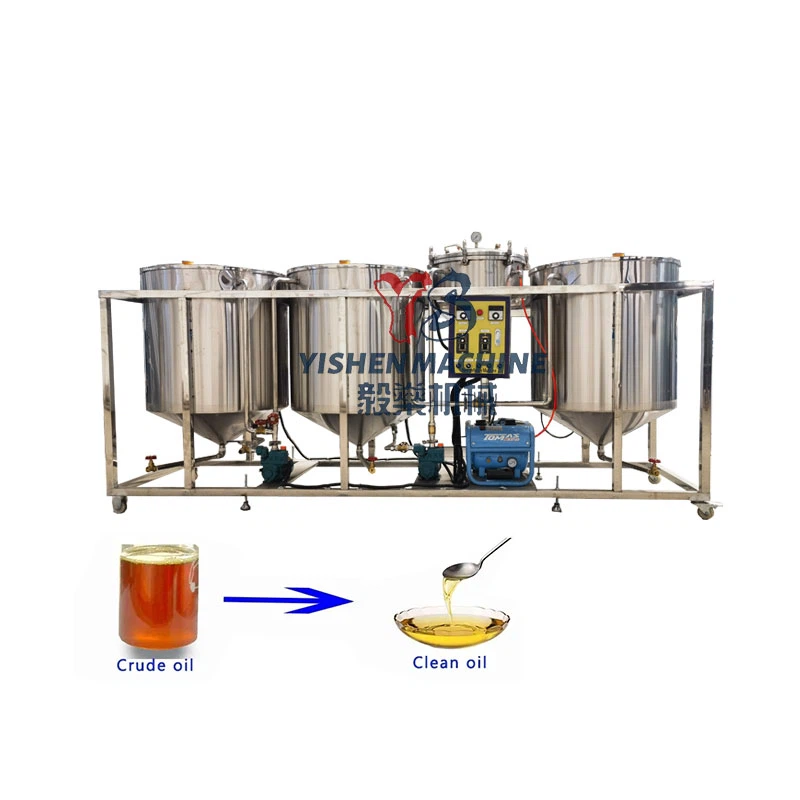

Our Offerings
As a refinery equipment supplier, we offer a wide range of cutting - edge refinery equipment that incorporates these latest technologies. Our Soybean Oil Refinery Machine is designed to efficiently refine soybean oil, using advanced distillation and separation technologies to ensure high - quality product output. Our Edible Oil Refinery Machine is suitable for refining various types of edible oils, with features such as advanced catalytic conversion and membrane separation options. And our Cooking Oil Refinery Machine is equipped with energy - efficient heating and cooling systems and automation controls to optimize the refining process.
Contact Us for Procurement
If you are in the market for high - quality refinery equipment, we invite you to contact us for procurement and further discussions. Our team of experts can provide you with detailed information about our products, their features, and how they can meet your specific refinery requirements. Whether you are looking to upgrade your existing refinery equipment or build a new refinery, we have the solutions to help you achieve your goals.
References
- Speight, J. G. (2014). The Refinery of the Future. Elsevier.
- Gary, J. H., Handwerk, G. E., & Kaiser, M. J. (2017). Petroleum Refining Technology and Economics. CRC Press.
- Rase, H. F. (2000). Chemical Reactor Design for Process Plants: Volume 1: Principles and Techniques. Wiley.