

How do oil refiners optimize their hydrogen production in the refining process?
Aug 01, 2025
Leave a message
Optimizing hydrogen production is a critical aspect of the refining process for oil refiners. As a supplier of Oil Refiner, I understand the challenges and opportunities that come with enhancing hydrogen production efficiency. In this blog, I will delve into the various strategies and technologies that oil refiners can employ to optimize their hydrogen production.
The Importance of Hydrogen in the Refining Process
Hydrogen plays a pivotal role in the refining process. It is used in a variety of key reactions, such as hydrocracking and hydrotreating. Hydrocracking is a process that breaks down heavy hydrocarbon molecules into lighter, more valuable products like gasoline and diesel. Hydrotreating, on the other hand, is used to remove impurities such as sulfur, nitrogen, and metals from crude oil and its derivatives. These processes are essential for meeting environmental regulations and producing high - quality fuels.
In addition, the demand for cleaner fuels is on the rise. Stricter environmental standards around the world require refiners to produce fuels with lower sulfur and nitrogen content. Hydrogen is crucial in achieving these low - impurity levels, making its efficient production a top priority for oil refiners.
Current Hydrogen Production Methods in Refineries
There are several methods that oil refiners commonly use to produce hydrogen. The most prevalent method is steam methane reforming (SMR). In SMR, methane (usually from natural gas) reacts with steam at high temperatures (around 700 - 1100°C) in the presence of a catalyst to produce hydrogen, carbon monoxide, and a small amount of carbon dioxide. The carbon monoxide then undergoes a water - gas shift reaction to produce additional hydrogen and carbon dioxide.
Another method is partial oxidation (POX). In POX, a hydrocarbon feedstock (such as heavy oil or coal) is partially combusted with oxygen in a non - catalytic process. This reaction produces a synthesis gas (syngas) composed mainly of hydrogen and carbon monoxide, which can be further processed to increase the hydrogen content.
Some refineries also recover hydrogen from off - gases generated during other refining processes. These off - gases, which may contain significant amounts of hydrogen, can be purified and recycled back into the refining process.
Strategies for Optimizing Hydrogen Production
Feedstock Selection
One of the primary ways to optimize hydrogen production is through careful feedstock selection. Natural gas is the most commonly used feedstock for steam methane reforming due to its high hydrogen - to - carbon ratio and relatively low cost. However, refiners can also explore alternative feedstocks such as biogas. Biogas, which is produced from the anaerobic digestion of organic matter, is a renewable source of methane. Using biogas can not only reduce the carbon footprint of hydrogen production but also provide a more sustainable option for refiners.
In addition, when considering partial oxidation, the choice of hydrocarbon feedstock can significantly impact hydrogen production efficiency. Refiners can select feedstocks with lower impurities and higher hydrogen content to maximize hydrogen yields.
Process Optimization
Refiners can optimize their hydrogen production processes by fine - tuning the operating conditions. For steam methane reforming, adjusting the steam - to - carbon ratio is crucial. A higher steam - to - carbon ratio can increase hydrogen production but also requires more energy. Refiners need to find the optimal ratio that balances hydrogen yield and energy consumption.
Temperature and pressure also play important roles. Increasing the temperature in the reforming reaction generally favors hydrogen production, but it also requires more energy and can put additional stress on the equipment. Similarly, adjusting the pressure can affect the equilibrium of the reactions and the overall efficiency of the process.
Advanced control systems can be implemented to monitor and adjust these operating parameters in real - time. These systems use sensors to collect data on temperature, pressure, and gas composition and then use algorithms to optimize the process based on pre - set goals.

Catalyst Improvement
Catalysts are essential in steam methane reforming and other hydrogen production processes. The performance of the catalyst can significantly impact the reaction rate and hydrogen yield. Refiners can invest in research and development to improve the catalysts used in their hydrogen production units.
New catalyst materials with higher activity, selectivity, and stability can be developed. For example, some researchers are exploring the use of novel metal - based catalysts that can operate at lower temperatures and pressures while still achieving high hydrogen yields. In addition, proper catalyst maintenance and regeneration are also important to ensure its long - term performance.
Integration with Other Processes
Integrating hydrogen production with other refining processes can also lead to significant optimization. For example, the heat generated from hydrogen production can be used to pre - heat feedstocks in other parts of the refinery. This reduces the overall energy consumption of the refinery and improves the energy efficiency of the entire system.
Refiners can also integrate hydrogen production with carbon capture and storage (CCS) technologies. Since hydrogen production processes often generate carbon dioxide, capturing and storing this carbon dioxide can help refiners meet environmental regulations and reduce their carbon footprint.
The Role of Refinery Equipment in Hydrogen Production Optimization
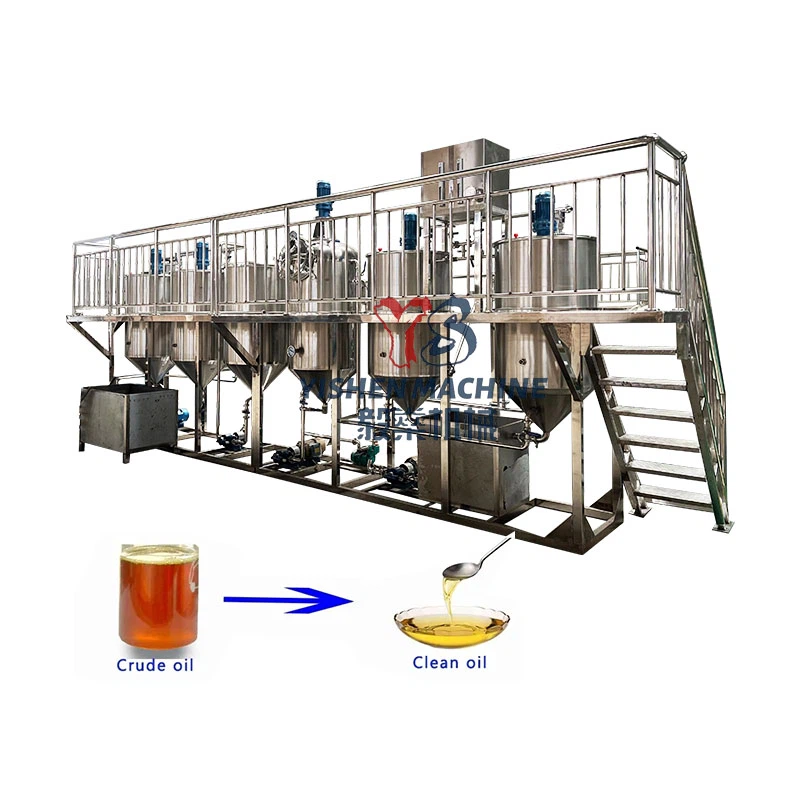
As a supplier of refinery equipment, I understand that the quality and performance of the equipment are crucial for optimizing hydrogen production. High - quality Oil Refiner and related equipment can ensure more efficient reactions and better control of operating parameters.
For example, advanced reformers used in steam methane reforming should be designed to provide uniform heating and good mixing of reactants. This helps to improve the reaction efficiency and increase hydrogen yields. Similarly, high - performance heat exchangers can be used to recover and reuse heat, reducing energy consumption.
In addition, equipment for gas separation and purification is essential for producing high - purity hydrogen. These systems should be able to effectively remove impurities such as carbon monoxide, carbon dioxide, and sulfur compounds from the hydrogen stream.
Case Study: Coconut Oil Refinery Machine and Hydrogen Production
Let's take a look at a specific example of how a Coconut Oil Refinery Machine can be related to hydrogen production optimization. In a coconut oil refinery, the by - products generated during the refining process can potentially be used as feedstocks for hydrogen production.
The waste materials from coconut oil refining, such as coconut husks and shells, can be gasified to produce syngas, which can then be further processed to produce hydrogen. This not only provides an alternative source of hydrogen but also helps to manage the waste generated in the refinery more effectively.
By integrating the coconut oil refining process with hydrogen production, the refinery can improve its overall efficiency and sustainability. The hydrogen produced can be used in the hydrotreating process to remove impurities from the coconut oil, resulting in a higher - quality final product.
Conclusion
Optimizing hydrogen production in the refining process is a complex but essential task for oil refiners. By carefully selecting feedstocks, optimizing processes, improving catalysts, integrating with other processes, and using high - quality Refinery Equipment, refiners can increase hydrogen yields, reduce energy consumption, and meet environmental regulations.
As a supplier of Oil Refiner, I am committed to providing the latest and most efficient equipment and technologies to help refiners optimize their hydrogen production. If you are interested in learning more about how our products can improve your hydrogen production process or if you have any questions regarding refinery equipment, please feel free to contact us for further discussion and potential procurement.
References
- Speight, J. G. (2014). The Chemistry and Technology of Petroleum. CRC Press.
- Song, C. (2003). An overview of new approaches to deep desulfurization for ultra - clean gasoline, diesel fuel and jet fuel. Catalysis Today, 86(1 - 4), 211 - 263.
- Rostrup - Nielsen, J. R., & Christiansen, C. H. (2003). Steam reforming and autothermal reforming of methane. In Handbook of Heterogeneous Catalysis (pp. 1911 - 1930). Wiley - VCH Verlag GmbH & Co. KGaA.