

What are the control systems used in refinery equipment?
Jan 21, 2026
Leave a message
As a trusted refinery equipment supplier, we understand the critical role that control systems play in ensuring the efficiency, safety, and reliability of refinery operations. In this blog post, we will explore the various control systems used in refinery equipment, their functions, and how they contribute to the overall success of a refinery.
Programmable Logic Controllers (PLCs)
Programmable Logic Controllers, or PLCs, are the workhorses of refinery control systems. These industrial computers are designed to automate and control manufacturing processes, including those in refineries. PLCs are highly reliable, flexible, and can be easily programmed to meet the specific requirements of a refinery.
In a refinery, PLCs are used to control a wide range of equipment, such as pumps, valves, compressors, and heaters. They monitor process variables, such as temperature, pressure, flow rate, and level, and adjust the operation of the equipment accordingly. For example, a PLC can be programmed to start a pump when the liquid level in a tank reaches a certain point and stop the pump when the level drops below another point.
PLCs also provide real-time data logging and monitoring capabilities, allowing operators to track the performance of the equipment and identify any potential issues before they become major problems. They can be connected to a human-machine interface (HMI), which provides a graphical representation of the process and allows operators to interact with the control system.
Distributed Control Systems (DCSs)
Distributed Control Systems, or DCSs, are more advanced than PLCs and are used to control large, complex processes in refineries. A DCS consists of multiple control nodes, each of which is responsible for controlling a specific part of the process. These nodes are connected to a central control room via a communication network, allowing operators to monitor and control the entire process from a single location.
One of the key advantages of a DCS is its ability to distribute the control functions across multiple nodes. This reduces the risk of a single point of failure and improves the reliability of the system. DCSs also provide advanced control algorithms and optimization capabilities, which can help to improve the efficiency and productivity of the refinery.
In addition to controlling the process equipment, DCSs also integrate with other systems in the refinery, such as safety systems, maintenance management systems, and enterprise resource planning (ERP) systems. This allows for seamless communication and data sharing between different parts of the refinery, improving overall operational efficiency.

Supervisory Control and Data Acquisition (SCADA) Systems
Supervisory Control and Data Acquisition, or SCADA, systems are used to monitor and control large-scale industrial processes, including refineries. A SCADA system consists of a central monitoring station, which is connected to remote terminal units (RTUs) located at various points in the process. The RTUs collect data from sensors and transmit it to the central monitoring station, where it is processed and displayed to the operators.
SCADA systems provide a high-level overview of the refinery operations, allowing operators to monitor the status of the equipment, track process variables, and receive alarms in case of any abnormal conditions. They also provide historical data logging and analysis capabilities, which can be used to identify trends and patterns in the process performance.
One of the main advantages of a SCADA system is its ability to provide real-time data from a large number of remote locations. This allows operators to make informed decisions quickly and take appropriate actions to ensure the safety and efficiency of the refinery. SCADA systems can also be integrated with other systems, such as DCSs and PLCs, to provide a more comprehensive control solution.
Safety Instrumented Systems (SISs)
Safety Instrumented Systems, or SISs, are critical for ensuring the safety of refinery operations. These systems are designed to detect and respond to potentially dangerous situations, such as overpressure, overtemperature, and leaks. SISs are independent of the normal control systems and are designed to operate in the event of a failure of the primary control system.
A SIS typically consists of sensors, controllers, and actuators. The sensors monitor the process variables and detect any abnormal conditions. The controllers receive the signals from the sensors and evaluate the situation. If a dangerous condition is detected, the controllers send a signal to the actuators, which take appropriate actions to prevent the situation from escalating.
SISs are designed to meet strict safety standards and regulations. They are required to have a high level of reliability and availability, and must be regularly tested and maintained to ensure their proper functioning.
Advanced Process Control (APC) Systems
Advanced Process Control, or APC, systems are used to optimize the performance of refinery processes. These systems use advanced control algorithms and mathematical models to predict the behavior of the process and adjust the control parameters in real-time to achieve the desired performance.
APC systems can be used to control a wide range of process variables, such as temperature, pressure, flow rate, and composition. They can also be used to optimize the operation of multiple units in the refinery, such as distillation columns, reactors, and heat exchangers.
One of the main benefits of APC systems is their ability to improve the efficiency and productivity of the refinery. By optimizing the process operation, APC systems can reduce energy consumption, increase product yield, and improve product quality. They can also reduce the variability in the process, which can lead to more consistent product quality and fewer production disruptions.
Conclusion
In conclusion, control systems play a crucial role in the operation of refinery equipment. From PLCs and DCSs to SCADA systems, SISs, and APC systems, each type of control system has its own unique functions and advantages. By using the right combination of control systems, refineries can improve the efficiency, safety, and reliability of their operations.
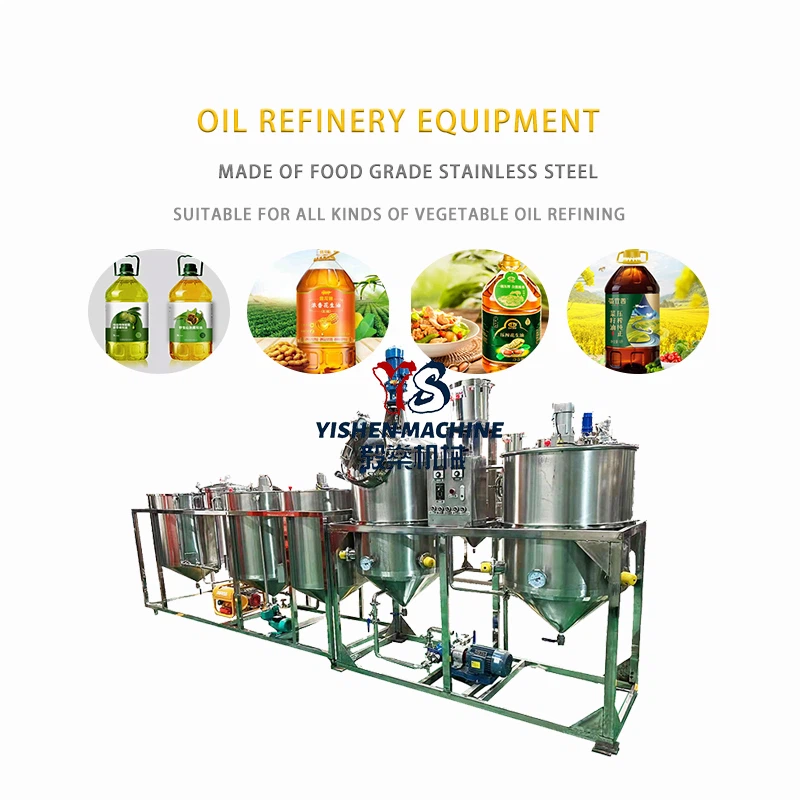
As a leading refinery equipment supplier, we offer a wide range of control systems and solutions to meet the specific needs of our customers. Whether you are looking for a small cooking oil refinery machine Small Cooking Oil Refinery Machine, a mini oil refinery plant machine Mini Oil Refinery Plant Machine, or an oil refinery machine for home Oil Refinery Machine for Home, we have the expertise and experience to provide you with the best control system for your application.
If you are interested in learning more about our refinery equipment and control systems, or if you would like to discuss your specific requirements, please feel free to contact us. We look forward to working with you to help you achieve your refinery goals.
References
- Bhushan, B., & Gupta, R. K. (2011). Industrial Instrumentation. New Delhi: McGraw-Hill Education.
- Shinskey, F. G. (2005). Process Control Systems: Application, Design, and Tuning. New York: McGraw-Hill.
- Smith, C. A., & Corripio, A. B. (1997). Principles and Practice of Automatic Process Control. New York: Wiley.