

Can a food oil refinery machine reduce the acid value of oil?
Aug 18, 2025
Leave a message
In the realm of the food oil industry, the acid value of oil is a crucial parameter that reflects its quality and stability. A high acid value often indicates the presence of free fatty acids in the oil, which can lead to off - flavors, reduced shelf - life, and potential health risks. As a supplier of Food Oil Refinery Machines, I am frequently asked whether our machines can effectively reduce the acid value of oil. In this blog, I will delve into the science behind this question and explain how our refinery machines play a significant role in this process.
Understanding the Acid Value of Oil
The acid value of oil is defined as the amount of potassium hydroxide (KOH) in milligrams required to neutralize the free fatty acids present in one gram of oil. Freshly extracted crude oil usually contains a certain amount of free fatty acids, which can come from various sources. For example, during the extraction process, enzymes in the oil - bearing materials may break down triglycerides into free fatty acids and glycerol. Additionally, improper storage conditions, such as exposure to high temperatures, humidity, and oxygen, can also accelerate the hydrolysis of triglycerides, leading to an increase in the acid value.
High acid value oils are not only less palatable but also more prone to oxidation. Oxidation of oils can produce harmful substances such as peroxides and aldehydes, which can cause rancidity and have negative impacts on human health when consumed. Therefore, reducing the acid value of oil is an essential step in the oil refining process to ensure the quality and safety of the final product.
How Food Oil Refinery Machines Work to Reduce Acid Value
Our Food Oil Refinery Machines are designed with a series of processes that can effectively reduce the acid value of oil. The main methods used in our machines include degumming, neutralization, and deodorization.
Degumming
Degumming is the first step in the oil refining process. Crude oil often contains phospholipids, which can cause problems during subsequent refining steps and also contribute to an increase in the acid value over time. Our Crude Oil Refinery Machine is equipped with advanced degumming technology. By adding water or acid solutions to the crude oil, the phospholipids can be hydrated and separated from the oil phase. This process not only removes impurities but also helps to reduce the initial acid value to some extent, as phospholipids can hydrolyze and release free fatty acids.
Neutralization
Neutralization is the most critical step for reducing the acid value of oil. In this process, an alkaline solution, usually sodium hydroxide (NaOH), is added to the degummed oil. The free fatty acids in the oil react with the sodium hydroxide to form soap (sodium salts of fatty acids) and water. The soap can then be separated from the oil phase through sedimentation or centrifugation.

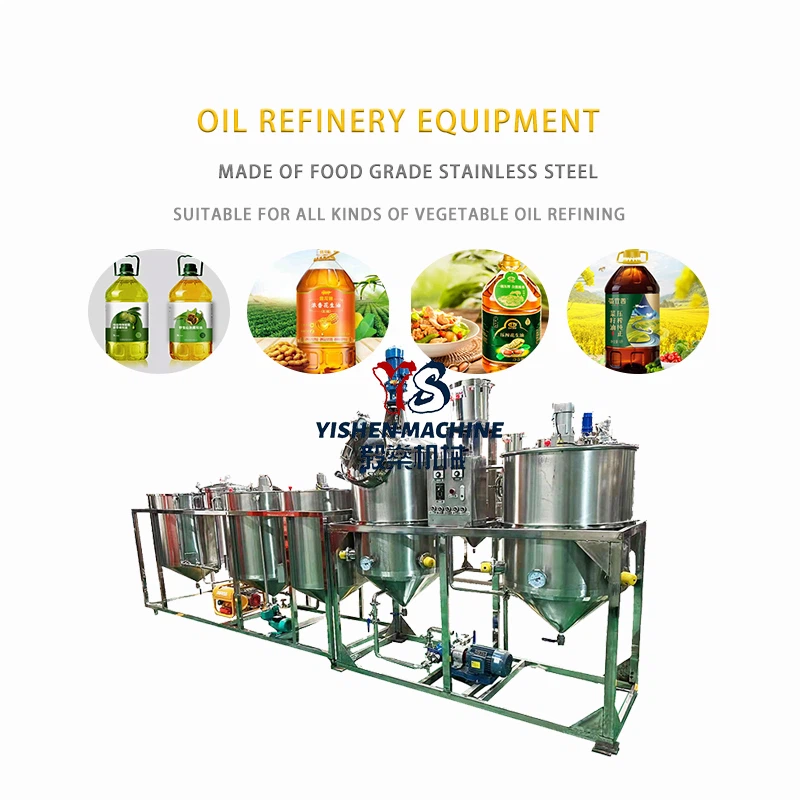
Our Food Oil Refinery Machines are designed to precisely control the amount of alkaline solution added based on the acid value of the incoming oil. This ensures that all free fatty acids are neutralized without over - treating the oil, which could lead to the loss of valuable neutral oil. The neutralization process can significantly reduce the acid value of the oil, often bringing it down to an acceptable level for further processing or direct consumption.
Deodorization
Although deodorization is mainly used to remove odorous compounds from the oil, it also has a secondary effect on reducing the acid value. During deodorization, the oil is heated under vacuum conditions, and steam is passed through it. This process can volatilize and remove any remaining free fatty acids and other low - molecular - weight impurities. Our Palm Oil Refinery Machine and other models are equipped with efficient deodorization systems that can further improve the quality of the oil by reducing the acid value and enhancing its flavor and stability.
Case Studies
To illustrate the effectiveness of our Food Oil Refinery Machines in reducing the acid value of oil, let's take a look at some real - world case studies.
A small - scale oil producer was struggling with high acid value palm oil. The initial acid value of their crude palm oil was around 5 mg KOH/g, which was well above the industry standard for edible oil. After installing our Palm Oil Refinery Machine, they were able to reduce the acid value to less than 0.1 mg KOH/g through a series of refining processes. This not only improved the quality of their product but also increased their market competitiveness.
Another customer, a home - based oil producer, was using a traditional method to refine oil and was unable to achieve a satisfactory acid value reduction. After purchasing our Oil Refinery Machine for Home, they were able to easily reduce the acid value of their homemade oil from around 3 mg KOH/g to less than 0.5 mg KOH/g. This allowed them to produce high - quality oil for their family and friends.
Factors Affecting the Acid Value Reduction
While our Food Oil Refinery Machines are highly effective in reducing the acid value of oil, there are several factors that can affect the final result.
Quality of Crude Oil
The initial acid value and quality of the crude oil have a significant impact on the refining process. If the crude oil has a very high acid value or contains a large amount of impurities, it may require more intensive refining steps and higher amounts of chemicals. Our machines are designed to handle a wide range of crude oil qualities, but starting with better - quality crude oil will generally lead to better results.
Operating Conditions
Proper operating conditions are crucial for achieving optimal acid value reduction. Factors such as temperature, pressure, and reaction time during each refining step need to be carefully controlled. Our machines are equipped with advanced control systems that can automatically adjust these parameters based on the characteristics of the incoming oil, ensuring consistent and efficient operation.
Maintenance of the Machine
Regular maintenance of the Food Oil Refinery Machine is essential to ensure its long - term performance. Worn - out parts, clogged pipes, or malfunctioning sensors can all affect the efficiency of the refining process and lead to sub - optimal acid value reduction. We provide comprehensive after - sales service and technical support to help our customers maintain their machines in good condition.
Conclusion
In conclusion, our Food Oil Refinery Machines are highly effective in reducing the acid value of oil. Through a combination of degumming, neutralization, and deodorization processes, we can help our customers produce high - quality oil with a low acid value. Whether you are a large - scale oil producer or a home - based enthusiast, our machines can meet your needs.
If you are interested in improving the quality of your oil by reducing its acid value, we invite you to contact us for more information about our Food Oil Refinery Machines. Our team of experts is ready to provide you with detailed product information, technical support, and even customized solutions based on your specific requirements. Let's work together to produce better - quality food oil.
References
- List of references related to oil refining processes and acid value measurement, such as textbooks on food science and industry - specific research papers. For example:
- "Bailey's Industrial Oil and Fat Products" by Fereidoon Shahidi.
- "Food Lipids: Chemistry, Nutrition, and Biotechnology" edited by Casimir C. Akoh and David B. Min.